The Loop: a 93 km glass snake around Dubai
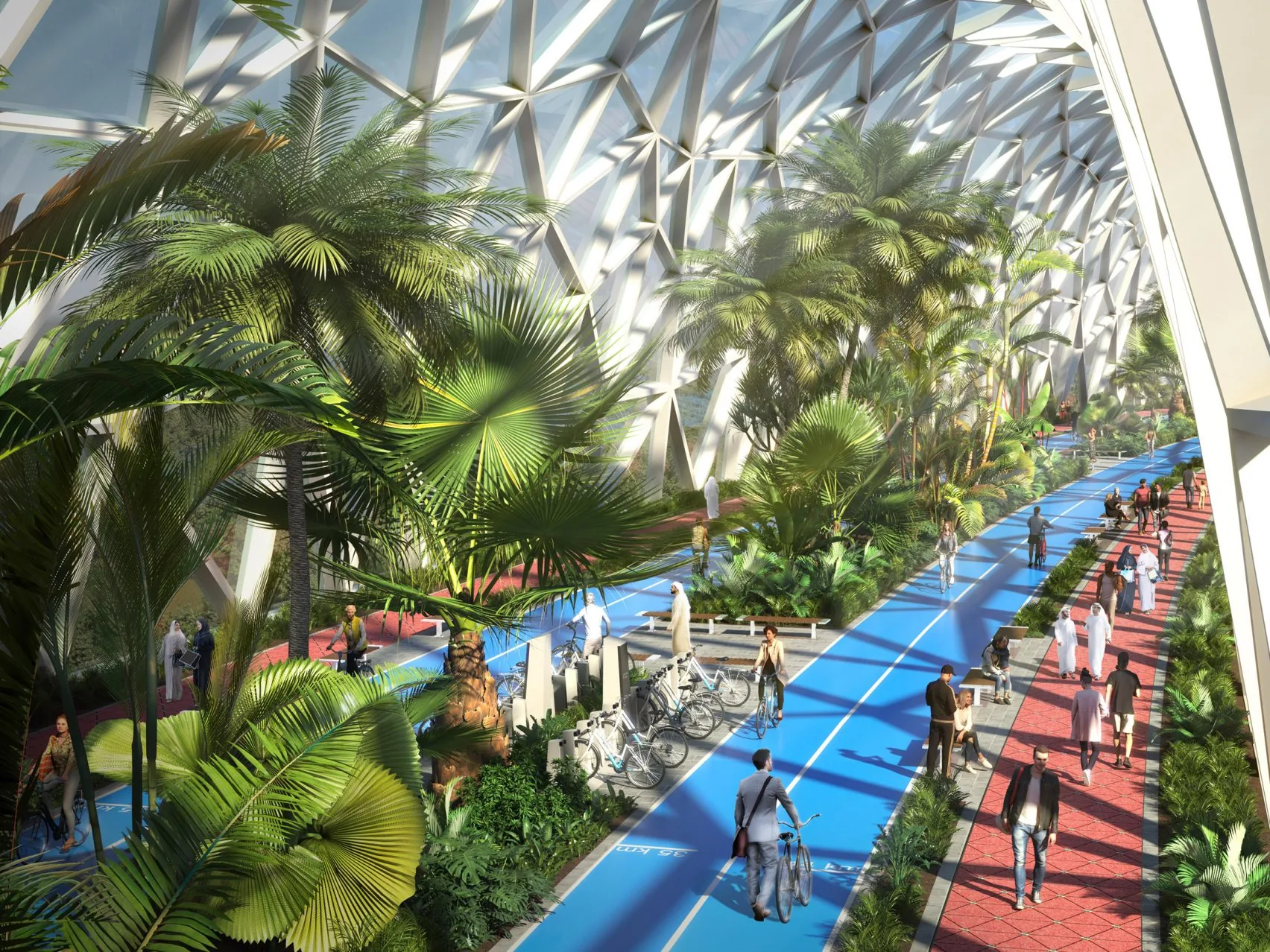
The Loop is a “sustainable urban highway” of 93 km designed by URB, a sustainable-cities developer. The idea: a long cycling and pedestrian corridor, fully air-conditioned and weather-protected, winding around Dubai to connect the city's major districts. The stated goal: make cycling and walking the primary mode of travel for more than 80% of residents by 2040, as part of the “20-minute city” initiative.
The route would serve more than 3 million residents and give them walking or cycling access to essential services within minutes. The structure — a curved glass tube — would also house vertical farms, parks, rest areas and fitness stations along the way: transport infrastructure becoming a public space in its own right. One futuristic detail: a kinetic floor that converts footsteps and passing bikes into electricity.
Careful not to confuse two projects. There are two “Loops” in Dubai. The one in this article — The Loop, 93 km of cycling and pedestrian path — is a concept by URB. It should not be mixed up with The Boring Company's Dubai Loop, a network of tunnels for Tesla vehicles (not bicycles), whose first 6.4 km phase links four downtown stations. Two underground visions, two developers, two different uses.
The real problem isn't distance: it's the climate
What makes The Loop relevant to us isn't the Dubai setting: it's the diagnosis. In Dubai, the obstacle to cycling isn't people's willingness, it's the heat: in summer, the temperature makes a simple daily trip miserable, even dangerous. URB's answer? Don't ask people to adapt to the climate — enclose the path in a controlled environment so cycling stays comfortable all year long, whatever the weather.
Replace +45 °C and a blazing sun with Québec's snow, black ice and -20 °C, and you get exactly our argument. Here as in Dubai, the weather turns surface cycling infrastructure into seasonal equipment, used a few months a year. A protected corridor means the cycling season goes from 6 months to 12 — no snow clearing, no ice, at a stable temperature, as we document on our ventilation and geothermal pages.
On glass… or under rock?
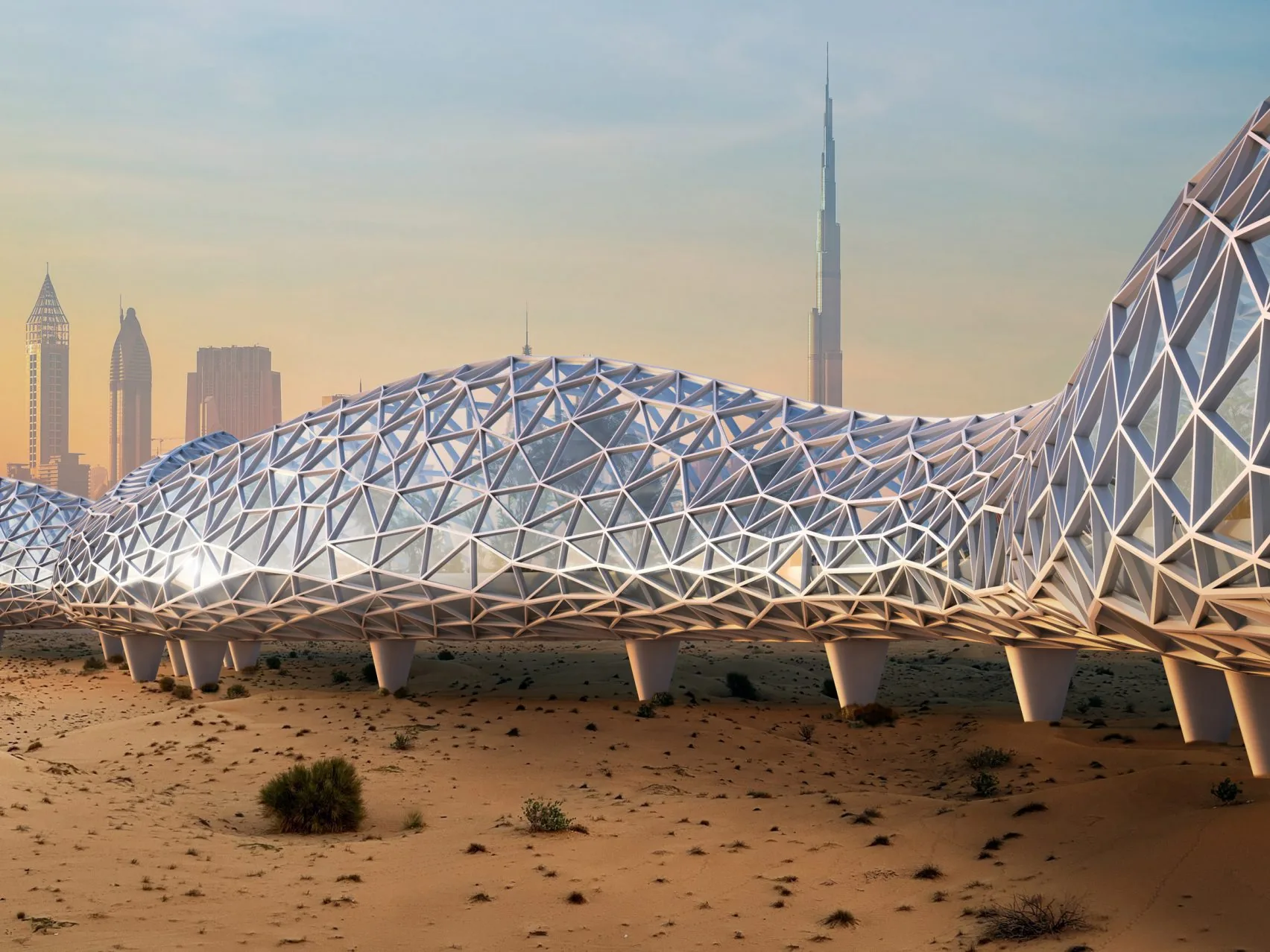
The big difference between Dubai and Québec City is where you put the path. The Loop is a glass tube at the surface, beautiful but expensive: you have to build a 93 km glazed structure, maintain it and actively cool it against the sun. Bike Tunnel Québec makes the opposite bet: underground, the rock does much of the work.
A tunnel benefits from the thermal inertia of the ground — a naturally stable temperature summer and winter — instead of fighting an extreme climate behind a glass wall. That's where The Boring Company's Prufrock tunnelling technology comes in: it aims precisely at driving down the cost per kilometre of excavation, to make a 150 km network conceivable — the numbers are in our price comparison. Where Dubai builds a spectacular architectural object, our approach relies on discreet infrastructure, invisible at the surface, taking no space away from the city.
What The Loop confirms — and what it doesn't settle yet
Let's be rigorous. The Loop validates the idea: an ambitious major metropolis is seriously considering that a protected, climate-controlled cycling network, at a scale of dozens of kilometres, is the right answer to make cycling practical year-round. The need is real, the scale is comparable to ours (93 km against our 150 km), and the climate argument is the same.
That said, The Loop is still at the planning stage: it is a flagship project of the “Dubai Cycle City 2040” strategy, not a tunnel already open with people riding through it every morning. For a precedent that is already in service, look to Norway: in Bergen, the Fyllingsdalstunnelen has been carrying cyclists under the mountain since 2023 — we devoted a full article to it. Dubai shows the ambition and the scale; Bergen shows that it works day to day. Bike Tunnel Québec sits between the two.
Sources and further reading: URB — official The Loop page · ArchDaily (design and renderings) · Dezeen · Momentum Mag.