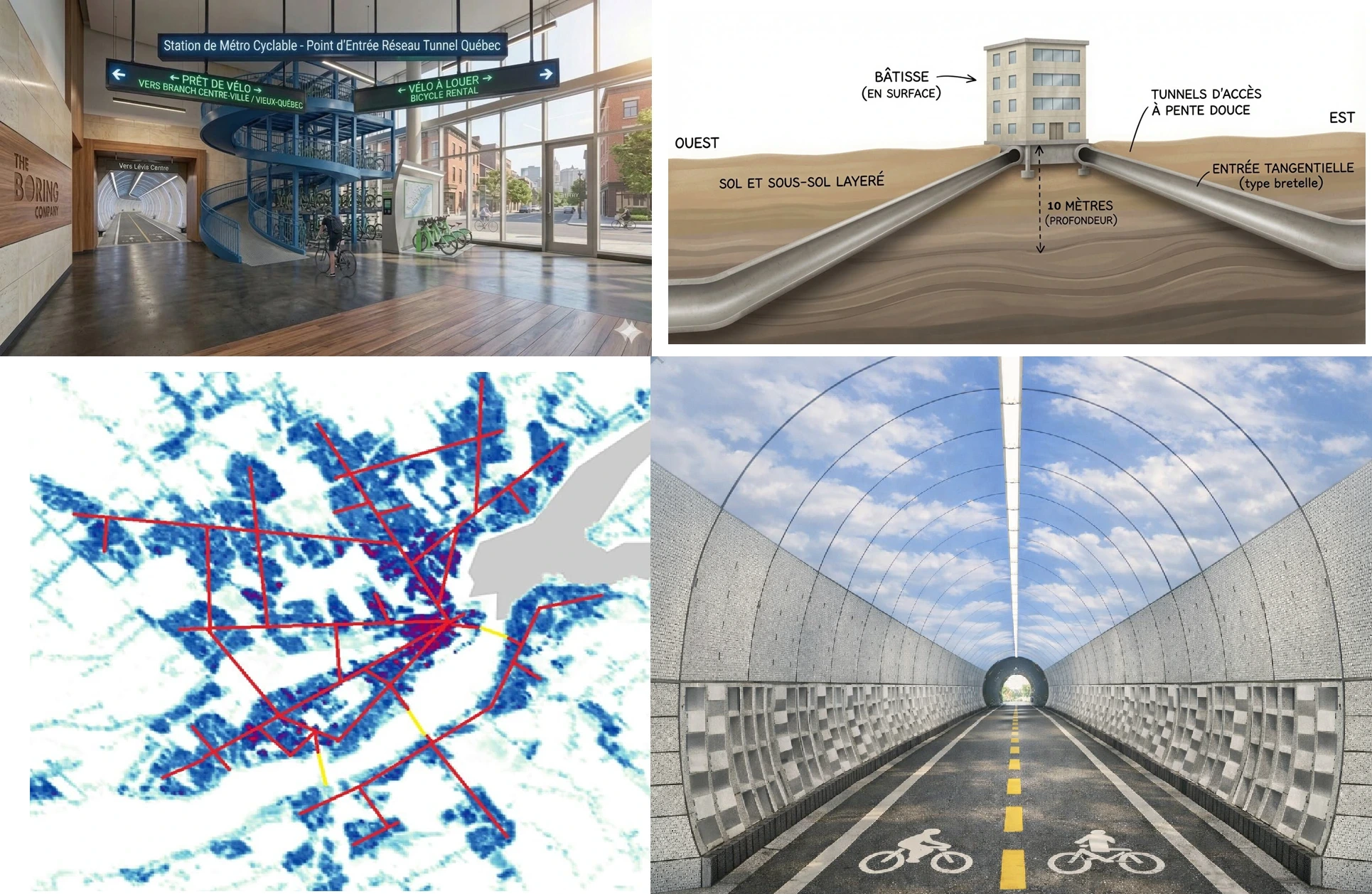
A win for drivers
Every person who goes underground is one fewer on the road and a parking spot that opens up. Even without ever touching a bike, the motorist comes out ahead.
- 100,000 fewer people on the surface at rush hour.
- Parking spots freed up, downtown and in the suburbs.
- More room on the roads — fewer cyclists to share them with when driving.
- No other project frees up car traffic this much for so little funding.
Economical
Three ways to measure the cost of a mode of transport — per kilometre built, per trip, and per user per year.
| Mode of transport | Length | Total cost | Cost / km |
|---|---|---|---|
| Bike tunnel — Bike Tunnel Québec | 150 km | ≈ $12.7B | ≈ $85M/km |
| Light metro — REM, Montréal | 67 km | $9.4B | ≈ $140M/km |
| Tramway — TramCité, Québec | 19.3 km | $7.6B | ≈ $394M/km |
| Network | Trips / yr | Operation / yr | Cost per trip |
|---|---|---|---|
| RTC — buses (actual 2024) | 31.5M | $280.7M | ≈ $8.90 |
| Bike tunnel — 10% target | 55M | $212M | ≈ $3.85 |
| Mode of transport | Annual cost / user | What it includes |
|---|---|---|
| Car | $8,000 – 12,000 | Purchase, fuel, insurance, maintenance, parking, plus public costs (roads, police, snow removal) |
| RTC — public transit | ≈ $4,700 | Public subsidy per regular user (operating + capital); users cover only ~27% of the cost |
| Bike tunnel | ≈ $2,330 | Amortization of $12.7B over 50 years (≈ $1,270) + operation (≈ $1,060), spread over 200,000 users |
A transport system
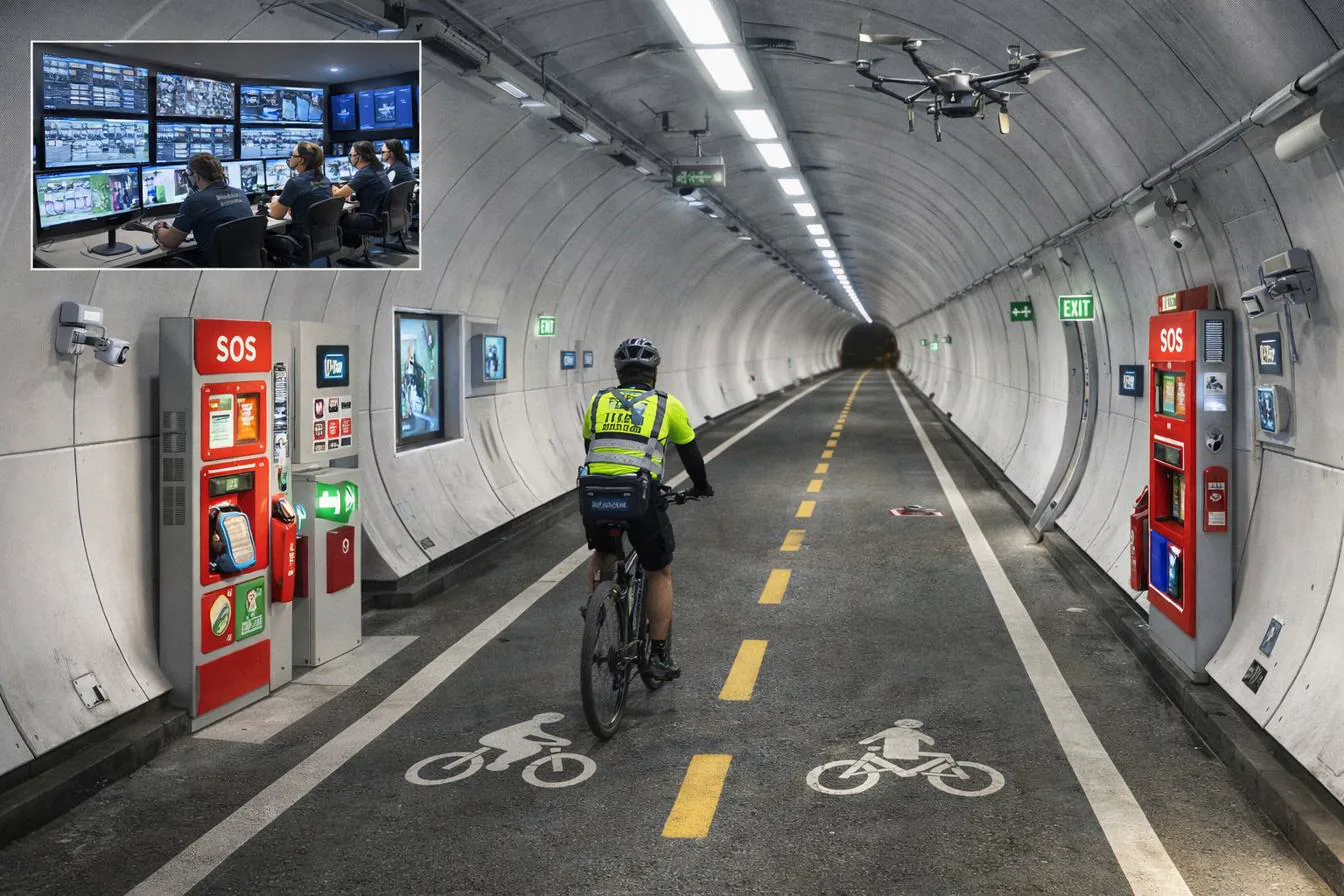
Fast, reliable, always open. A bike in a straight tunnel, with electric assist and no stops: almost as fast as a car, without any of what makes other networks break down.
- Fast — no stops, in a straight line, with electric assist: almost as fast as a car.
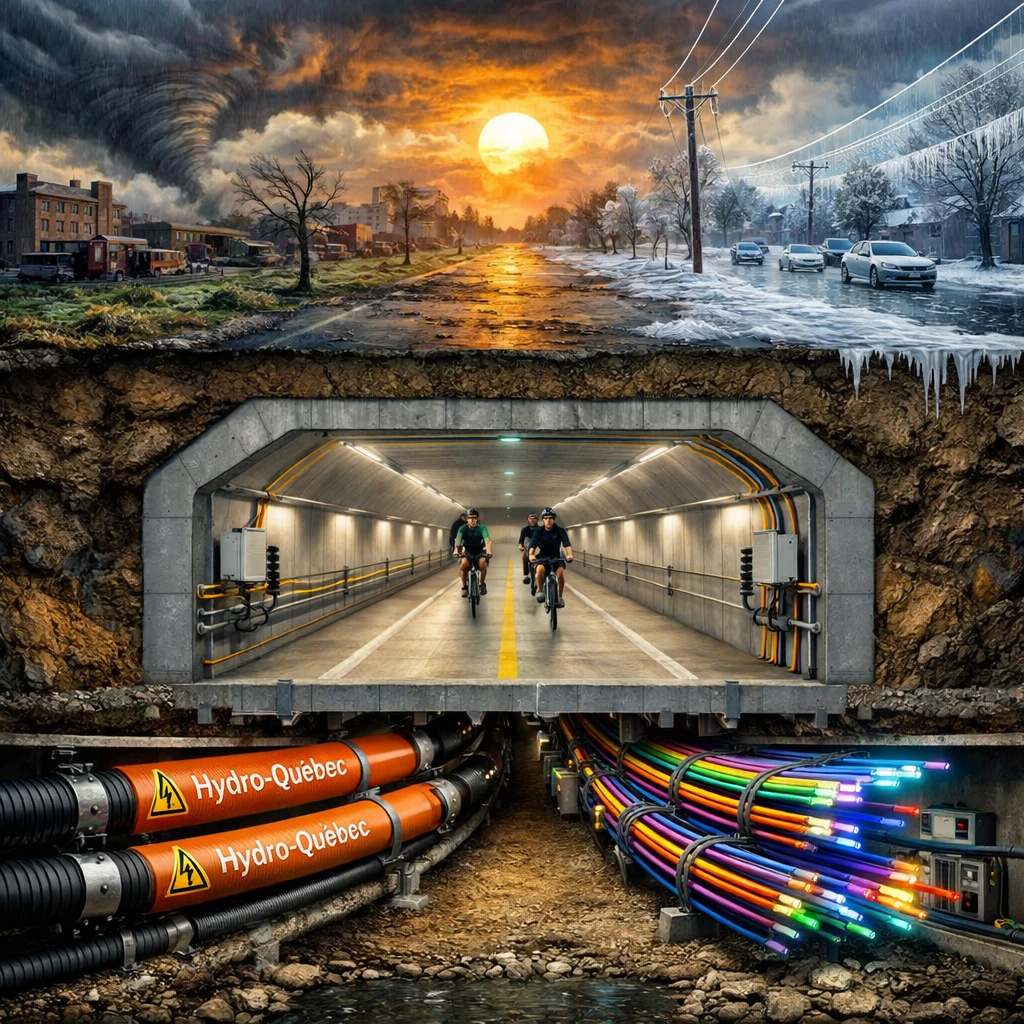
- Reliable — ultra-simple technology, powered by Hydro-Québec but with a gas generator in case of an outage.
- No strike possible (no drivers).
- 24/7.
- No licence needed.
- Works even during a tornado or an ice storm.
- Teens can use it, even at 3 a.m.
- 150 km of network.
- Sans effort gràce à l'assistance électrique ou avec effort sans :)
Energy
A bike, even electric, uses a fraction of the energy of a car or a bus. At the scale of a region, that adds up.
- Québec would need less electricity and less oil.
- One more step toward energy independence.
- Part of the energy comes from the infrastructure naturally (natural geothermal).
Safety
Underground, at 10 °C year-round, sheltered from ice storms, heatwaves and tornadoes — and away from the dangers of the street at night.
- Ice-storm-proof — the power cables are underground.
- Shelter from tornadoes.
- Shelter from heatwaves — 10 °C at all times.
- Safer than walking outside, alone, at 3 a.m.
Health
Cycling every day, without thinking about it, on your way to work. A more active population means a healthcare system that can breathe.
Sweat-free thanks to electric assist.
- Prevention — daily exercise built into the commute.
- Relief for the healthcare system.
Another use
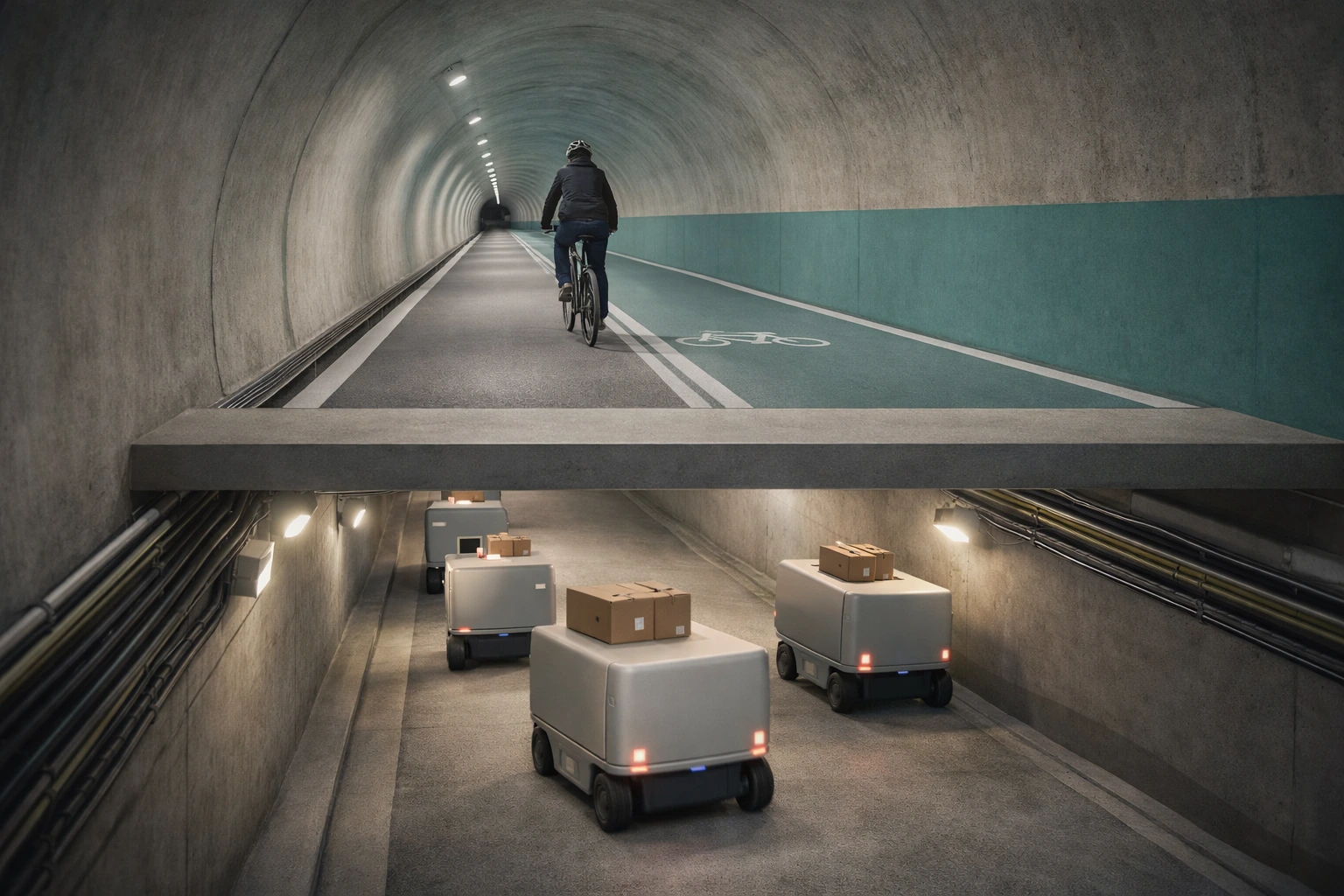
At night, or continuously beneath the cycle path, the same tunnel can move parcels.
- Parcel delivery by automated drone beneath the tunnel, 24/7.
Note
- Motorists: don't worry — you'll still be able to drive your car, and with more room on the road.
- Geological study: yes — to determine the exact route, a geological study is included in the construction price.