The deal is simple. Your surface paths stay 100% where they are. The tunnel is one more option — for rainy days, winter, long trips, or simply when you feel like riding sheltered from cars. On a fine June evening, you take your favourite path along the river as always. The tunnel just waits for you, for whenever you want it.
The tunnel converts, shrinks or closes no existing path. It adds one, about ten metres below.
A pool that multiplies the political weight of cycling — so more budget for bike paths, on the surface and underground. See the market study.
Cycling becomes possible 12 months a year — for whoever wants it. 10 °C year-round, no snow or ice.
We remove no path — we add one, beneath your feet
It’s the number-one fear, and it deserves a clear answer: no surface path is touched. Where a surface bike lane often triggers a battle — because it removes a car lane, a row of parking, or narrows a street — the tunnel takes nothing from anyone: it’s dug ten metres below. The network you love stays intact, down to the centimetre. Nothing converted, nothing closed, nothing narrowed.
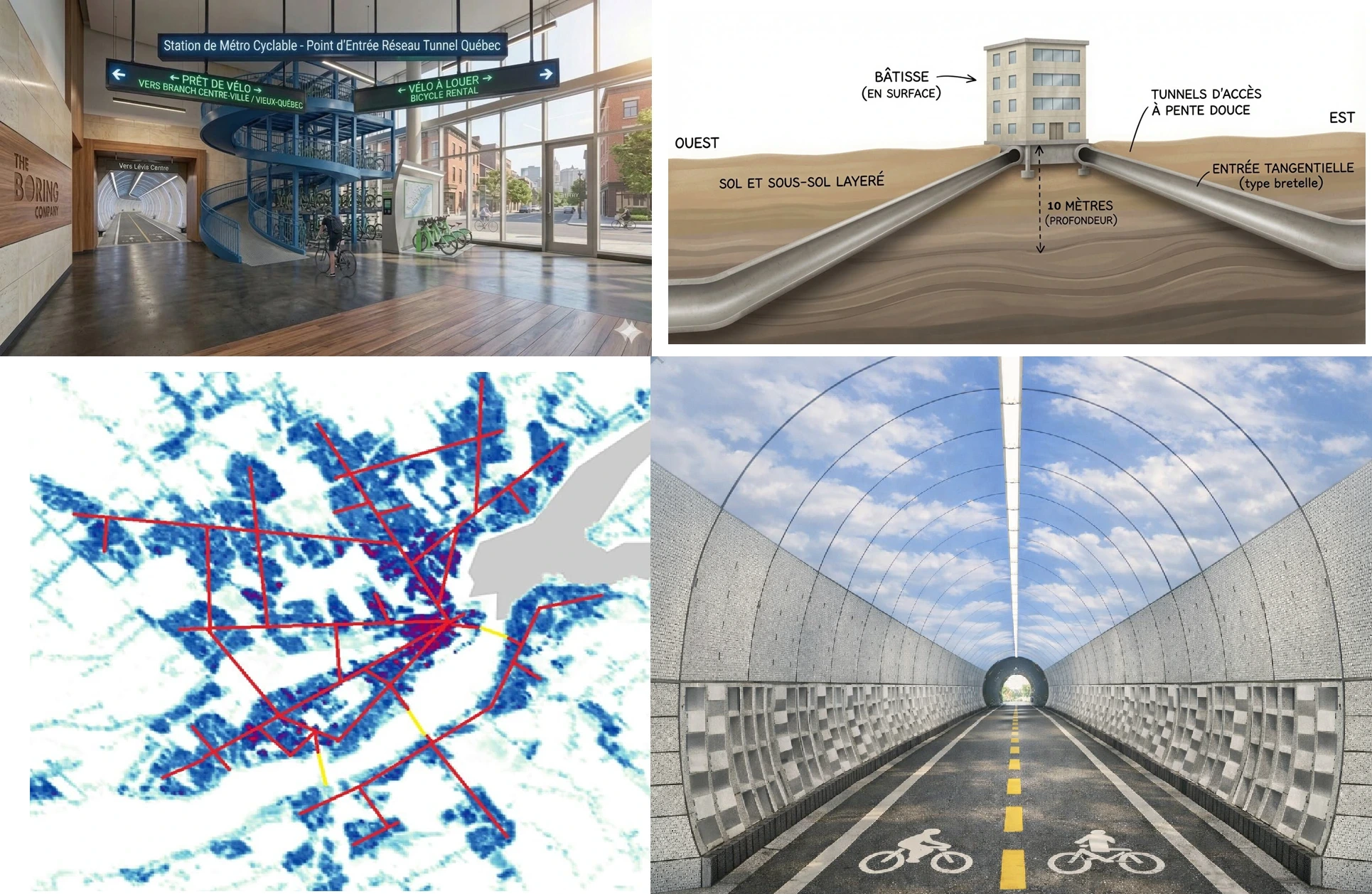
Better still: because the tunnel absorbs a share of the trips — and of the pressure on shared streets — the surface becomes calmer for those who stay on it. Adding a level underground subtracts nothing from the surface: it relieves it.
What you don’t lose
- No surface path converted, shrunk or closed: the network you know stays whole.
- No forced detour: if your current route suits you, nothing changes for you.
- The tunnel doesn’t “steal” surface cycling budgets — on the contrary, it attracts new ones (see below).
- Your habits, your routes, your river views: all stay exactly where they are.
Nobody is sending you underground
Let’s kill the misunderstanding head-on: the tunnel is a choice, never an obligation. It exists for the days when the surface isn’t inviting — a cold November rain, a patch of black ice, a headwind, darkness at 5 p.m., a boulevard too busy to ride at ease. In fine weather, you keep your favourite route. The tunnel doesn’t take offence: it sleeps until you need it.
In other words, the tunnel is invisible when you don’t want it and available when you do. It doesn’t ask you to give up the sky, the river and the trees — it offers a 10 °C plan B for the six months when the sky, the river and the trees are a little less welcoming.
To the die-hards on studded tires: the surface stays yours
Some cyclists ride all winter on studded tires and would never trade the open air for a tunnel — and that’s perfectly fine. This page isn’t addressed to them, and they lose absolutely nothing. They even gain: fewer fair-weather cyclists on the paths when the weather turns, and above all surface paths finally better cleared of snow (more on that below). The enthusiasts keep the surface, less crowded and better maintained than before.
The real target audience: the easygoing, occasional, semi-sedentary rider
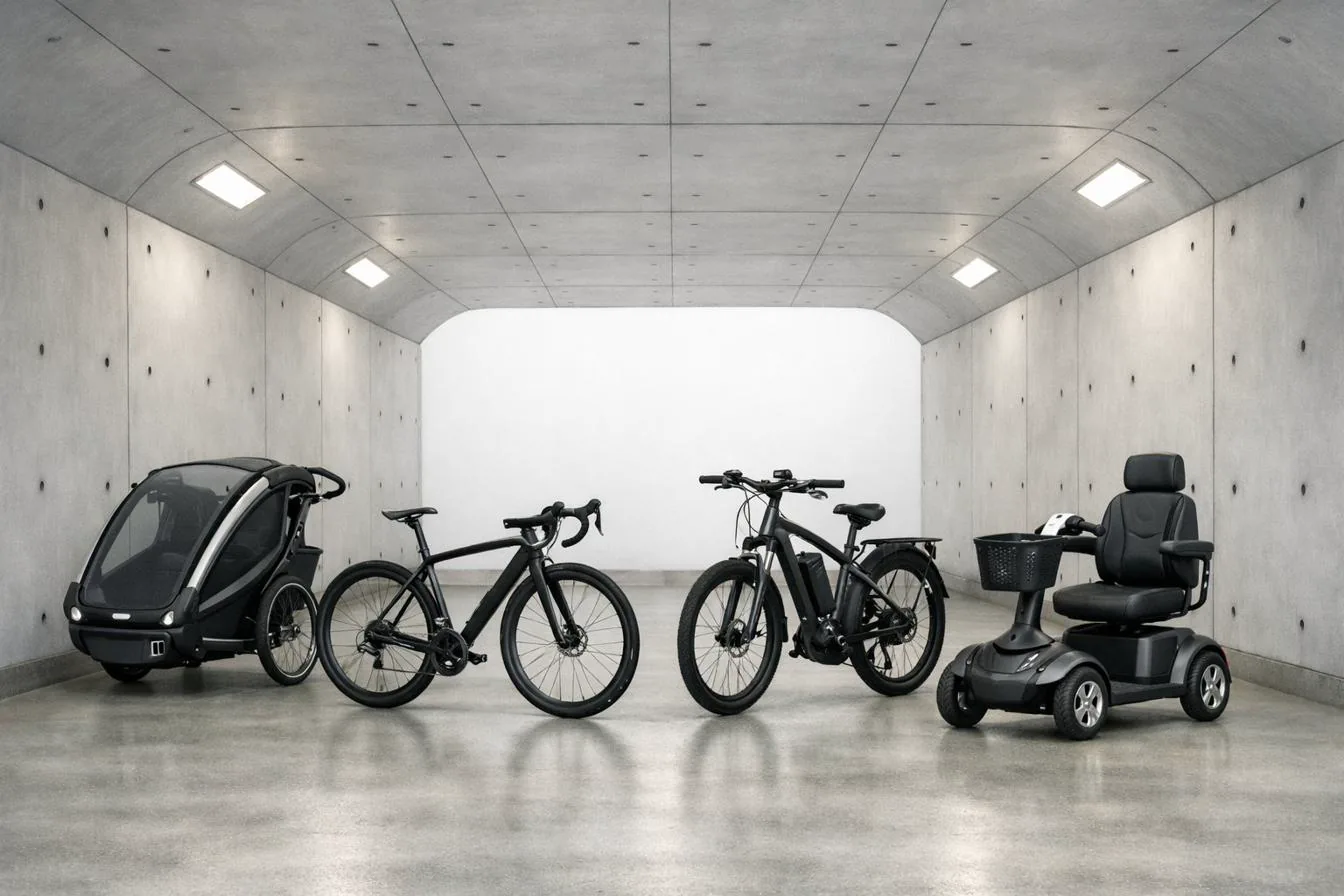
So who is the tunnel really for? For those who love cycling, but not against the wind. Who would ride to work if it weren’t for the rain, the ice, the traffic, or the hill that finishes them off every morning. For the occasional cyclist, the one who rides at an easy pace, the semi-sedentary person who would move more if it were easy, comfortable and safe. For them, the surface has too many “buts”: too cold, too wet, too dangerous, too exhausting, too seasonal.
The tunnel erases the “buts”: flat from end to end (no more hill), 10 °C year-round (no more weather), no cars (no more fear), lit and monitored (no more dark stretches). It turns “I’d love to bike, but…” into “I bike.” Each of these new cyclists is someone who wasn’t riding before — a net gain for cycling, not a transfer from the surface.
The more cyclists there are, the more cycling weighs
Here’s the fear turned right-side up. Some worry the tunnel will “steal” the attention and budgets of surface cycling. The opposite happens. The political weight of cycling is roughly proportional to the number of people who pedal. Today, cyclists are a minority a city council or a government can easily push to the bottom of the list. Multiply that number — add up to 200,000 people riding — and cycling stops being an afterthought: it becomes a force that can no longer be ignored.
And these new cyclists don’t pedal only underground. They rediscover cycling, join the ranks of those “who ride,” and start demanding better surface paths, safer intersections, more racks, snow clearing. Every new tunnel user is one more voice pushing cities and governments to invest more in cycling — on the surface as well as underground. The tunnel is a growth engine for the whole movement, not a competitor.
A larger cycling community is a stronger one. The tunnel doesn’t split cyclists between “surface” and “underground”: it grows them. And a bigger community gets more — more paths, more budgets, more respect on the road.
The tunnel finally forces snow clearing of the paths
Here’s a benefit for all surface cyclists, even those who will never put a wheel in the tunnel. To reach a station, you cover a short surface segment — the famous first (or last) mile. If that segment isn’t cleared of snow in winter, the tunnel becomes inaccessible. So the tunnel creates a new, concrete obligation for cities: to keep the cycling routes leading to the stations clear and safe, all winter long.
And that obligation doesn’t stop at the station door. Clearing an access network to dozens of stations means clearing a large part of the surface cycling network — for the benefit of every winter cyclist, whether they take the tunnel or not. For the first time, winter path maintenance has a rationale that can no longer be brushed aside. See how this first mile is handled.
A lever for a transit system that carries bikes
A network like this only works if you can get to it — and that pushes public transit to carry bikes. To feed the tunnel, the RTC has every interest in developing bike racks on buses, bike spaces, and park-and-ride lots near the stations. It’s multimodal infrastructure — bus + bike + tunnel — that serves all cyclists, whether they go underground or not. Cycling stops being “transit’s problem” and becomes something transit is designed to carry.
What the tunnel changes for you, the cyclist
🛤️ Your surface paths, intact
- No path converted, shrunk or closed: the network only grows
- Nothing changes on your current routes if you like them
- One more cycling layer, not one path fewer
🌦️ Cycling in any weather — for whoever wants it
- 10 °C year-round, no rain, snow, ice or headwind
- Flat from end to end: no more discouraging hill
- On days the surface isn’t inviting, a dry plan B
❄️ Better-cleared paths in winter
- Reaching the stations finally forces cities to clear the first mile
- A maintained approach network = a gain for every winter cyclist
- Path snow clearing finally has a rationale that can’t be dismissed
📣 Cycling that carries more weight
- Up to 200,000 more cyclists = ten times the political weight
- More riders = more pressure to invest in cycling, above and below
- The tunnel grows the cycling community instead of dividing it
🚌 A transit system that carries bikes
- Feeding the network pushes buses to carry bikes
- Bike racks, park-and-ride lots, bus + bike + tunnel chains
- Multimodal infrastructure useful to all cyclists
🛡️ Riding at last with no cars
- No cars underground: no blind spots, no dooring, no tight passing
- Lit and monitored along its whole length
- Ideal for the less experienced, children, and anxious parents
Scenes from real life
| The situation | What the tunnel changes |
|---|---|
| Fine June evening — you feel like riding by the water | You take your favourite surface path. The tunnel sleeps — it never asked to see you. |
| 5 p.m., early November — cold rain and darkness | Instead of getting back in the car, you slip underground, dry, at 10 °C. A bike trip saved. |
| January — a die-hard on studded tires | The surface is theirs: less crowded, and finally better cleared on the way to the stations. |
| An easygoing rider — intimidated by the boulevard | Underground, no cars: they ride relaxed, at their own pace, without being honked at. |
| After supper — the teen heads to practice | A lit, monitored trip, no cars: the parents relax, the teen is independent. |
| Morning after a storm — the usual path is a snowbank | The segment to the station is now cleared (new obligation), then the tunnel takes over. |
The tunnel takes nothing from you — and it gives cycling a boost the surface alone never managed. Your paths stay, the die-hards keep the open air, and cycling as a whole becomes more numerous, better funded and better cleared of snow. Keep riding exactly as you do today. And the day the weather turns, there will finally be a 10 °C plan B, sheltered from cars. The tunnel isn’t cycling’s enemy: it’s the ally it was missing.